Ciambotta, the tasty and healthy Mediterranean summer side dish.
5 people
1
First, wash all the vegetables under running water and dry them well.
2
For convenience, clean and cut all the vegetables into small to medium-sized cubes before starting the cooking process. This way, the cooking process will be easier. Transfer the vegetables into separate bowls as you go.
3
Clean and slice the onion, then transfer it to a large pan with 3 tablespoons of extra virgin olive oil and let it wilt for a few minutes, stirring occasionally.
4
Now add the eggplant and sauté it with the onion for a couple of minutes.
5
Add the bell peppers and potatoes, let them cook for a couple of minutes, then add the zucchini, cherry tomatoes, and basil leaves. Mix well and let cook for another minute over medium heat.
6
Sprinkle the vegetables with water and tomato purée, then stir and cover with a lid. Let it cook over low heat for about twenty minutes or until the vegetables are tender.
7
Once ready, turn off the heat and adjust with salt and pepper. You can serve the ciambotta hot, immediately after cooking, or warm or at room temperature.
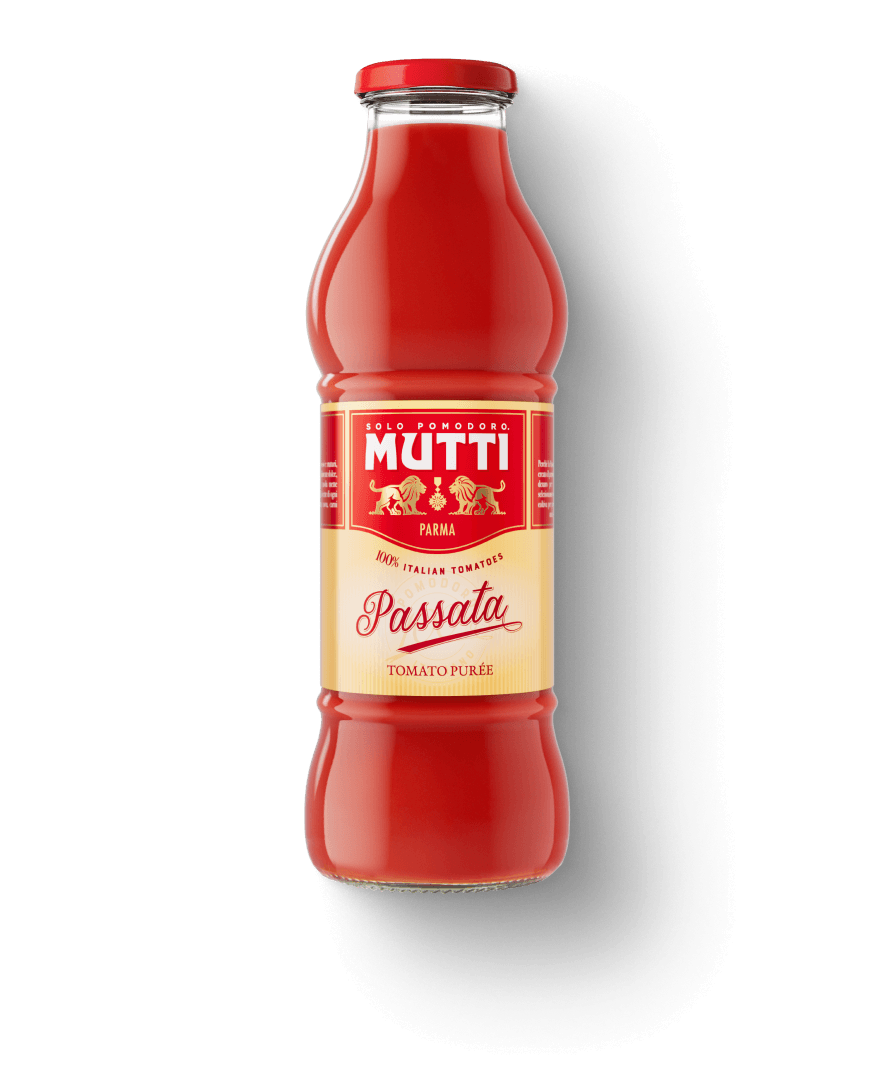
Ciambotta is the quintessential summer side dish, a mix of fresh, seasonal vegetables that is both tasty and healthy, ideal as an accompaniment to your main dishes, or simply enjoyed on its own, perhaps with a nice slice of lightly toasted bread. The secret to a perfect ciambotta is undoubtedly Mutti Passata Tomato Purée, which brings all the vegetables together in a single embrace, making them even more appetizing and flavorful.
Ciambotta originates from peasant culture as a nutritious dish consumed during the arduous workdays in the fields. Interestingly, it was stored in a very peculiar container…a loaf of bread hollowed out of its crumb, an ingenious idea that allowed farmers to make their meal even more substantial without having to carry an additional dish. But where exactly does the word “ciambotta” come from? It is a dialect term that finds its origins in the French word “chabrot,” literally “mixture.” From this term, all the dialect variations depending on the region where it is prepared (ciabotto in Abruzzo and cianfrotta in Lazio, for example) are derived, variations that are also reflected in the use of ingredients, such as fava beans.