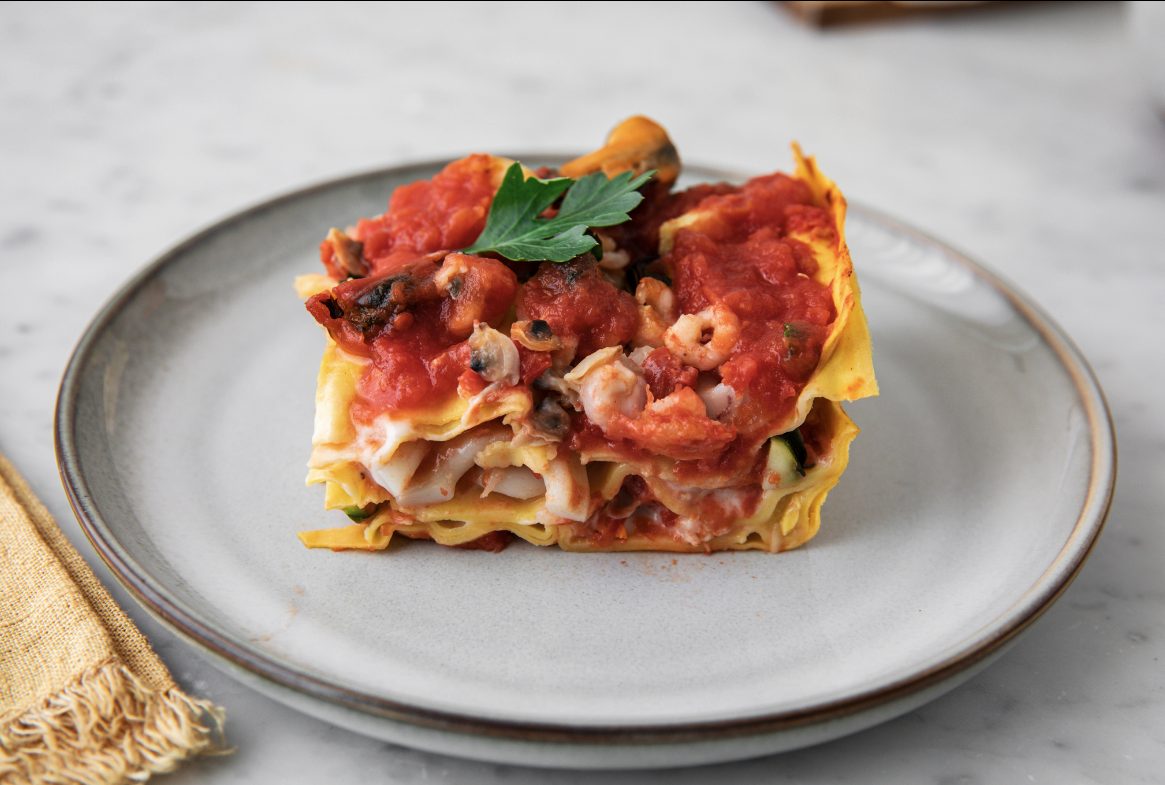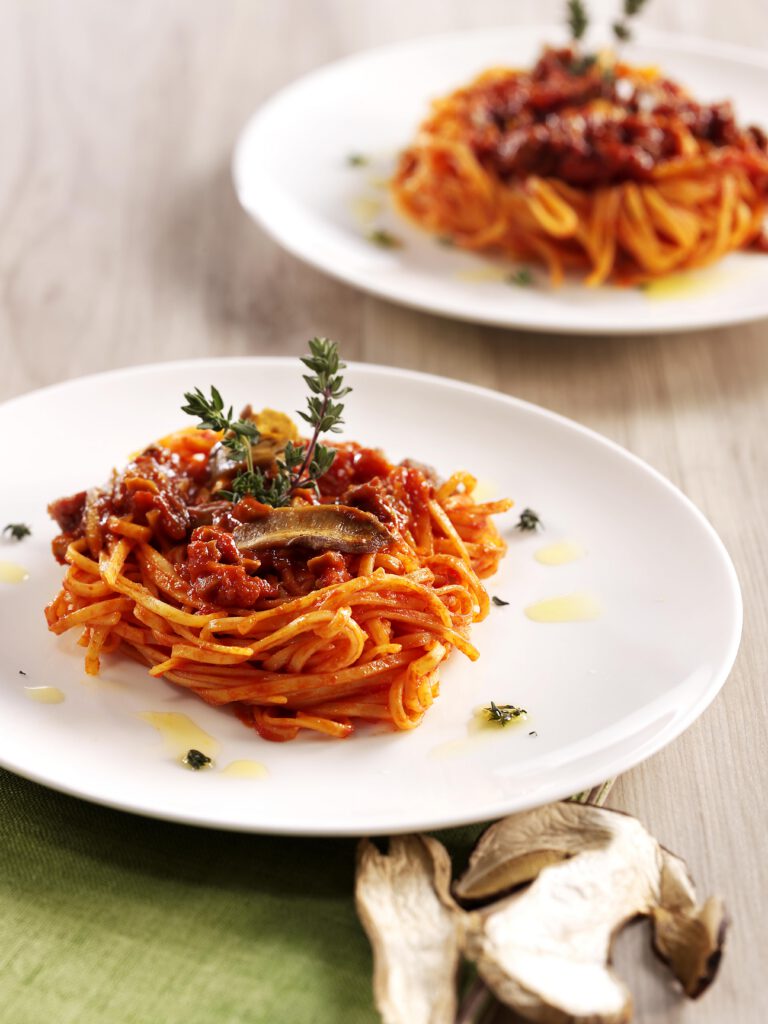
Make a delicious seafood lasagna with fresh lasagna sheets, tender seafood and Mutti Finely Chopped Tomatoes. Their rich tomato flavour creates a perfectly balanced sauce that complements the seafood and brings freshness and depth to every layer.
6
1
In a large skillet add the mussels and the clams (previously washed and cleaned).
2
Cover with a lid until the mussels and the clams are opened, then put them aside without the cooking liquid.
3
In another skillet, add garlic and extra virgin olive oil, the squid and the shrimp, and the mussels and clams without the seashell. In the same skillet add the filtered cooking liquid.
4
Add the tomato puree and simmer for 5 minutes. When it's ready add the parsley.
5
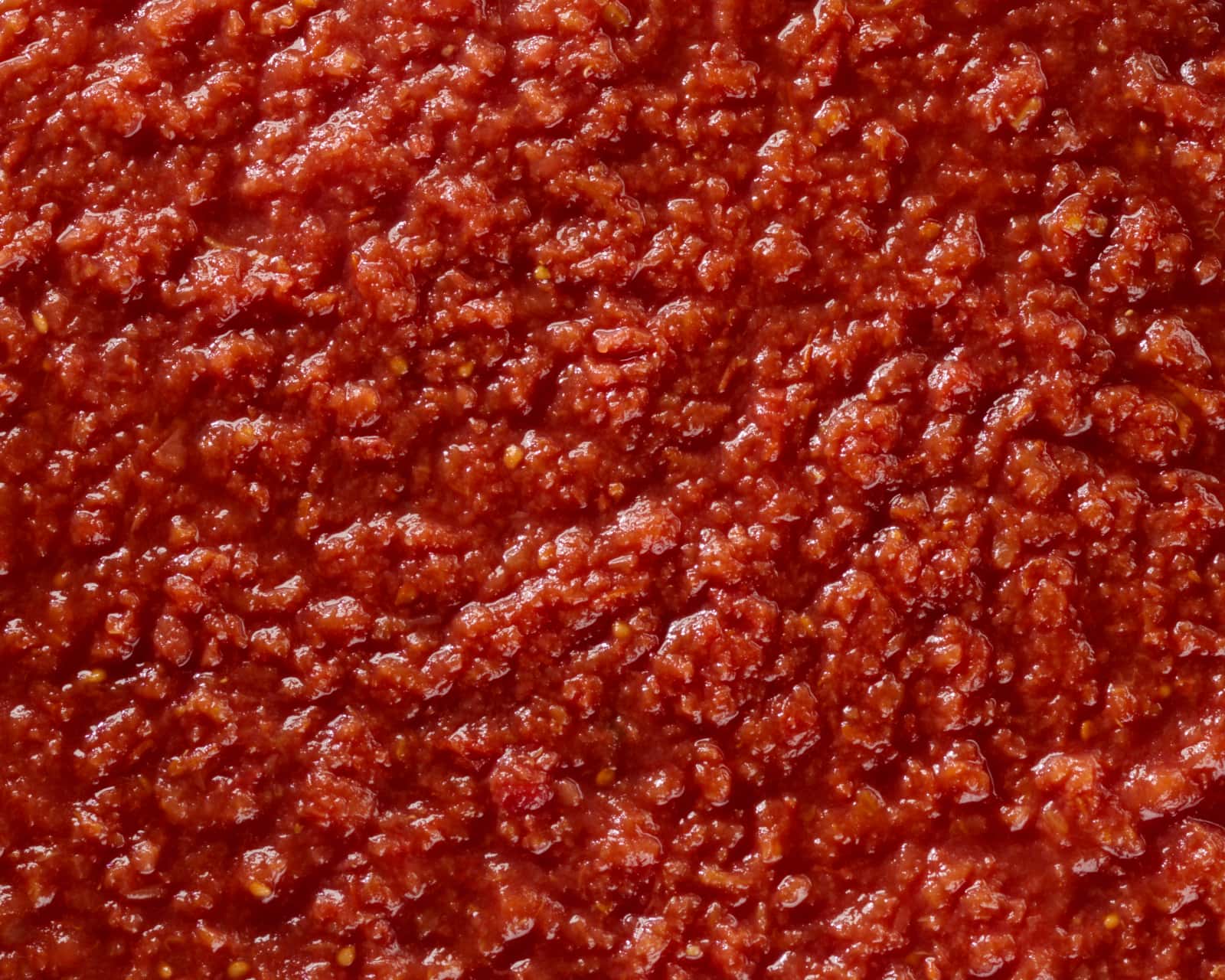
Add the Mutti Finely Chopped Tomatoes and cook everything for 10 minutes.
6
Pre-heat the oven at 200° C.
7
In a baking tray, spread a layer of bechamel, a layer of fresh lasagna sheets and another layer of the condiment. Repeat the layers until you reach the top of the baking tray.
8
Cover with a aluminium foil and cook it in the oven for 30 minutes. Remove the aluminium foil and cook for another 30 minutes.
9
Let it rest for 15 minutes before serving.
Lasagna has a long history in Italian cuisine, with references to layered pasta dishes dating back to medieval Italy. Early versions were very different from the lasagna we know today: pasta sheets were boiled in water, dried and layered with simple ingredients such as cheese. Over time, recipes became richer, with fillings that could include eggs, cheese and other ingredients.
By the end of the 19th century, one of the most famous versions had begun to take shape: Lasagne alla Bolognese, the classic dish from Emilia-Romagna made with layers of pasta, traditional ragù and béchamel.
Pasta sheets are one of the essential elements of a good lasagna. They can be dried, fresh or homemade, and each type brings a slightly different texture to the finished dish.
Fresh lasagna sheets are generally ready to layer directly into the dish, while some dried varieties may need to be briefly boiled first, depending on the product instructions. Homemade pasta is another traditional option. A simple rule of thumb is to use one egg for every 100 g of flour. Once the dough has been kneaded and rested for around 30 minutes, it can be rolled into thin sheets ready for layering.
One of the reasons lasagna remains so popular is its versatility. Beyond the traditional Lasagne alla Bolognese, it can be prepared in countless ways, from vegetarian lasagna to seafood, fish or meat-based recipes.
Whatever the variation, the quality of the ingredients makes a real difference. Good pasta, a flavorful filling and high-quality tomatoes help create rich, balanced layers and make every lasagna more satisfying.