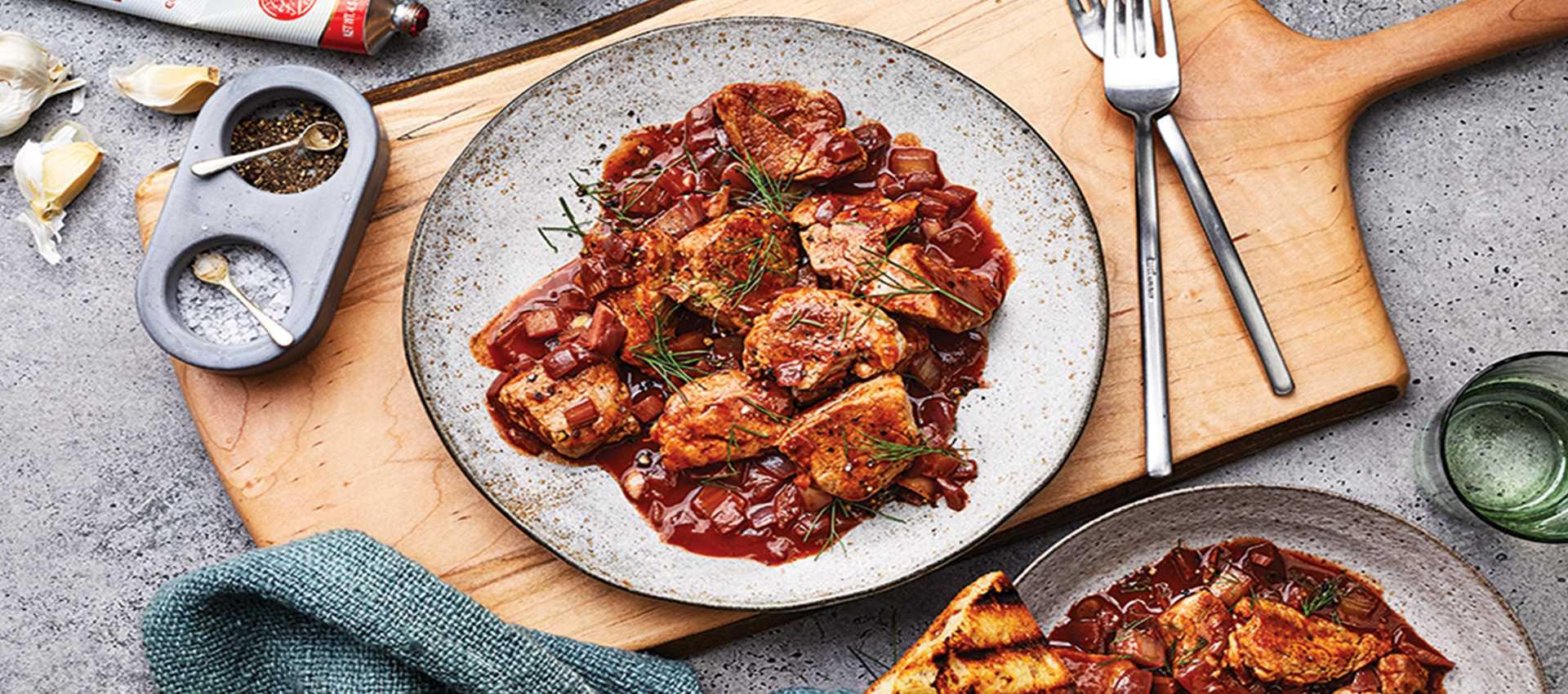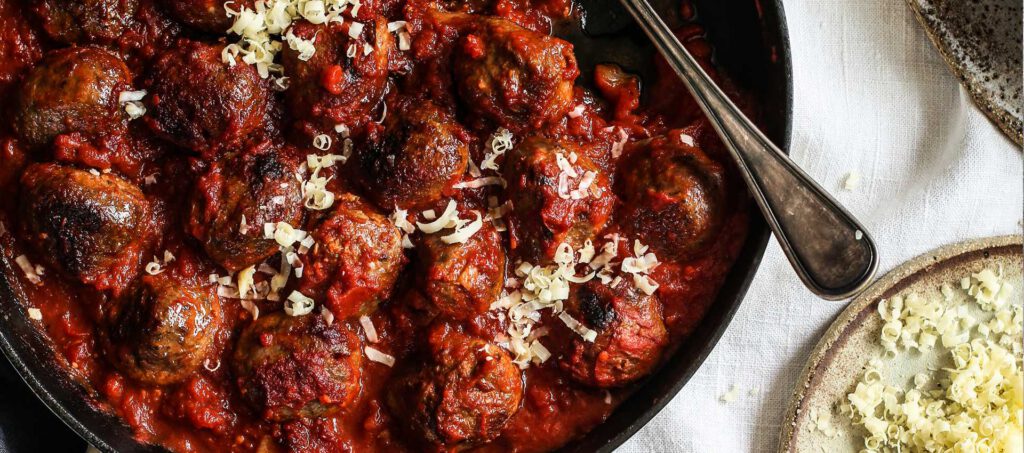
The rich, deep flavor of the sauce is courtesy of a red wine braise and tomato paste, which infuses the sauce with the illusion that it spent all day simmering on the stovetop, though it takes just half an hour. A full-bodied red wine that’s not too tannic works best here.
1
Heat the oil in a large, high-sided skillet over high heat. Season the pork with 1 teaspoon of salt and 3/4 teaspoon of pepper. Add it to the pan and cook for 3–4 minutes, turning occasionally, until browned on all sides. Remove the pork from the pan and set aside.
2
Add the onion, fennel, thyme and garlic to the same pan. Cook for 5–6 minutes, stirring occasionally, until the onion becomes soft and translucent.
3
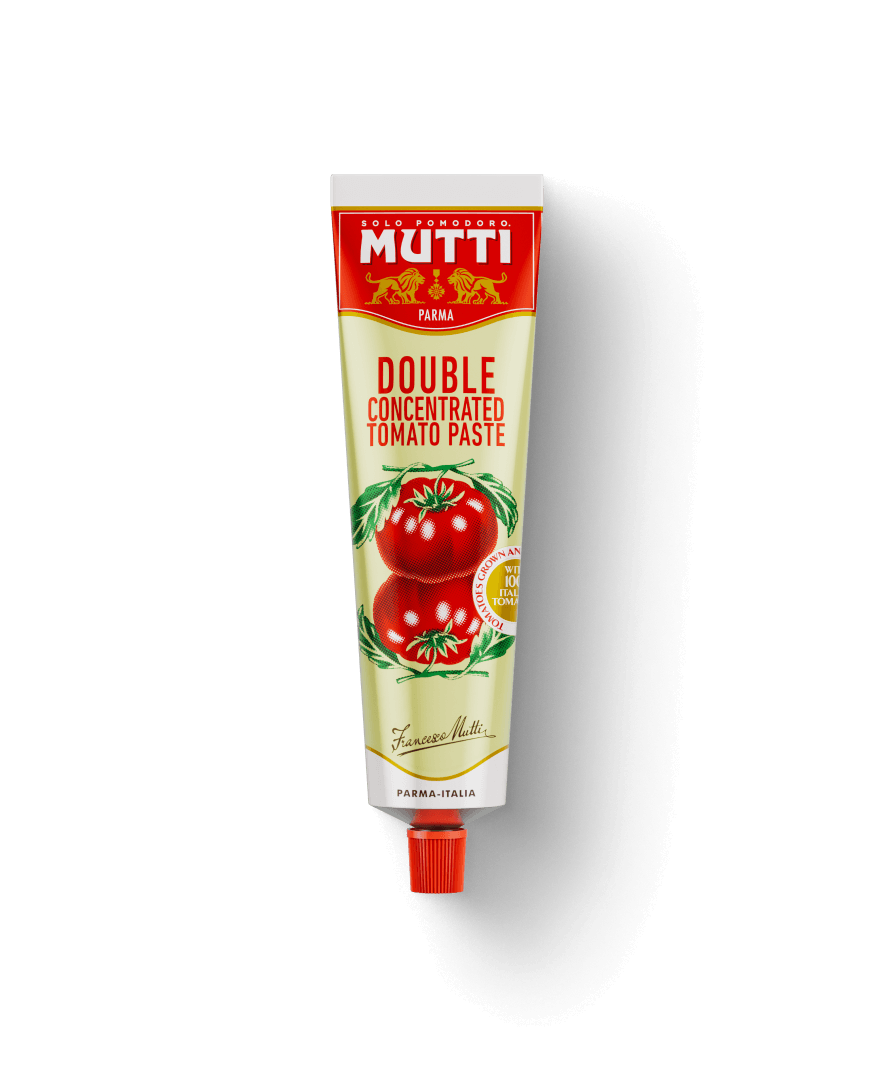
Pour in 1/2 cup of wine and add the tomato paste. Cook, stirring frequently, until most of the wine has evaporated and the mixture becomes thick and concentrated, about 2–3 minutes. Add the remaining 1 cup of wine and let it simmer for 3–4 minutes, or until reduced by about half.
4
In a bowl, whisk 1/2 cup of the stock with the flour until smooth and free of lumps. Pour this mixture into the pan, followed by the remaining 1 1/2 cups of stock. Bring to a gentle simmer over medium-high heat, then reduce the heat to low and cook for about 10 minutes, until the sauce has slightly thickened.
5
Return the pork to the pan and simmer for about 3 minutes, or until heated through and well coated in the sauce. Stir in the remaining 1/2 teaspoon of salt, 1/2 teaspoon of pepper, the parsley and vinegar. Serve the pork warm with plenty of the tomato and Sangiovese sauce spooned over the top.
Pork tenderloin is a lean cut that cooks quickly, so careful timing is essential to keep it tender and juicy. Sear the meat first to develop flavour, then finish cooking it gently in the sauce. Check the internal temperature at the thickest point with a meat thermometer and aim for 63°C / 145°F, followed by a short rest. This ensures the pork is safely cooked while helping prevent it from becoming dry or overcooked.